
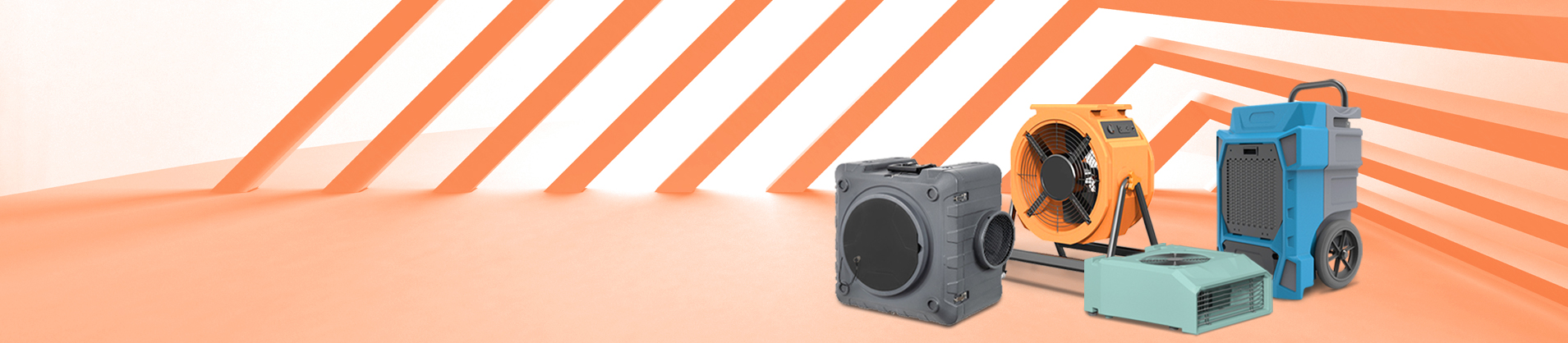
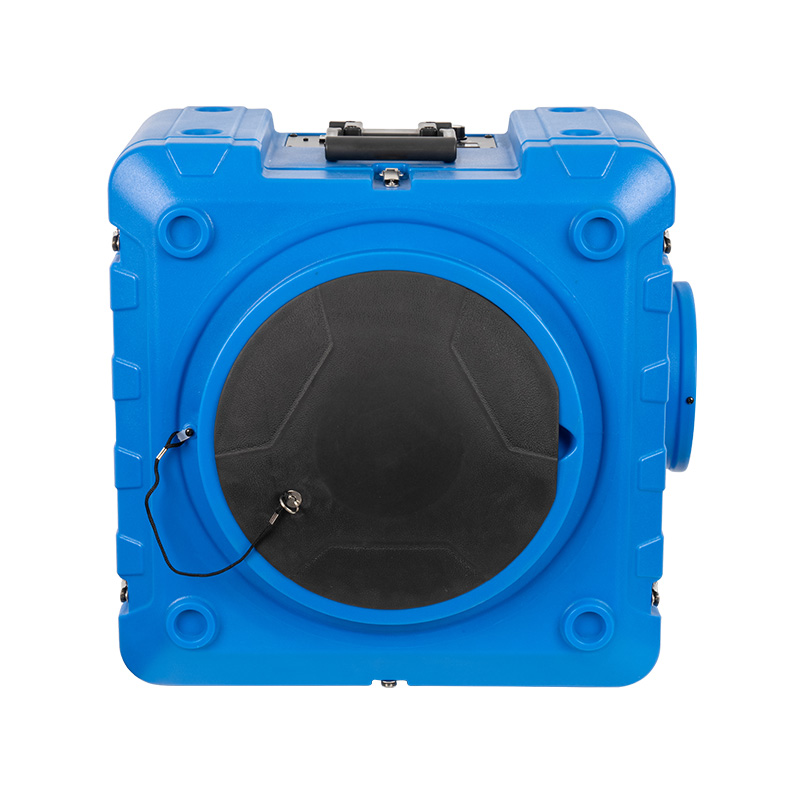
An air mover is a high-velocity, motor-driven fan built to speed up evaporation from wet surfaces such as carpet, drywall, hardwood, and concrete. Unlike a household fan that scatters air in every direction, an air mover concentrates its output into a focused, directional stream — typically 600 to 4,000+ cubic feet per minute (CFM) — that sweeps moisture-laden air off a surface so a dehumidifier can pull it out of the room. A flat air mover (also called a low-profile or thin-profile air mover) is a specific style built to slide under cabinets, counters, and raised furniture where a standard upright unit won't fit.
This article breaks down how air movers work, the difference between flat air movers and other designs, how to size CFM to a room, and how to place units correctly so drying time stays as short as possible.
An air mover works on a simple principle: moving air across a wet surface breaks up the thin layer of saturated air sitting right above it, replacing it with drier air that can absorb more moisture. This constant exchange accelerates evaporation far faster than still air ever could. The moisture doesn't disappear — it moves from the surface into the air, which is why air movers are almost always paired with a dehumidifier that then extracts that moisture from the room.
Inside the housing, a motor spins a fan wheel — either axial (blades parallel to airflow) or centrifugal (blades perpendicular to airflow) — that draws air in through an intake and forces it out through a shaped nozzle. That shaping is what separates an air mover from a box fan: the output is compressed into a narrow, high-speed stream instead of a broad, low-speed breeze.
Most units draw 3 to 5 amps at 120 volts, which matters on job sites because a standard 15-amp household circuit can safely run only two to three air movers before tripping a breaker.
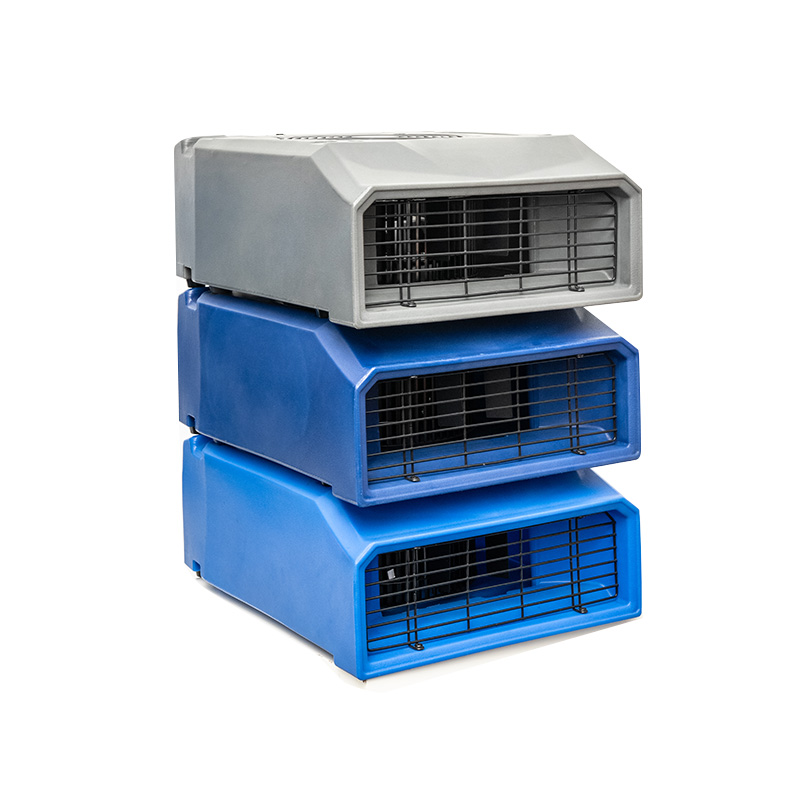
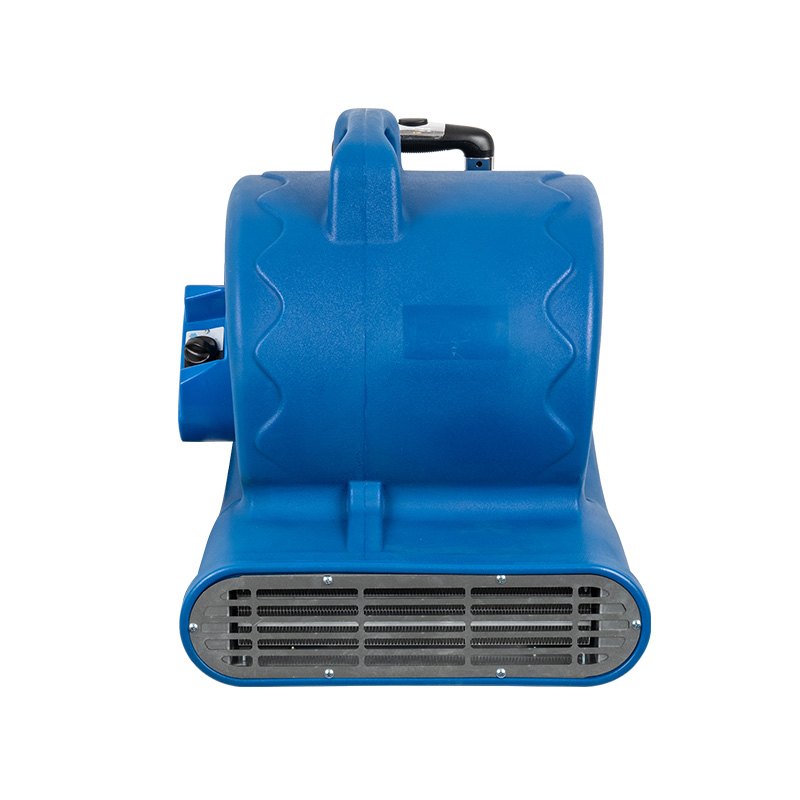
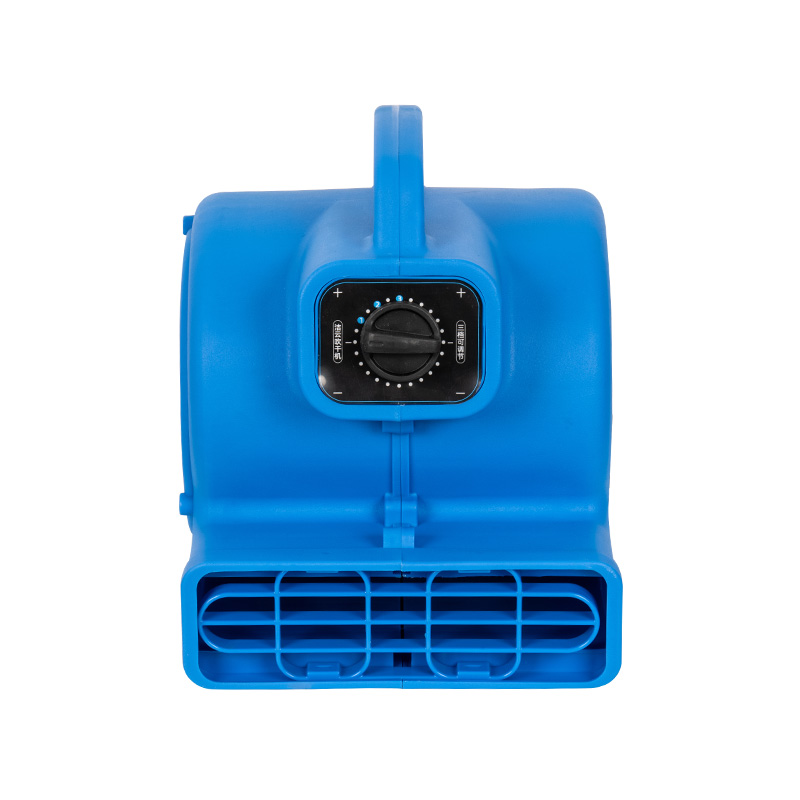
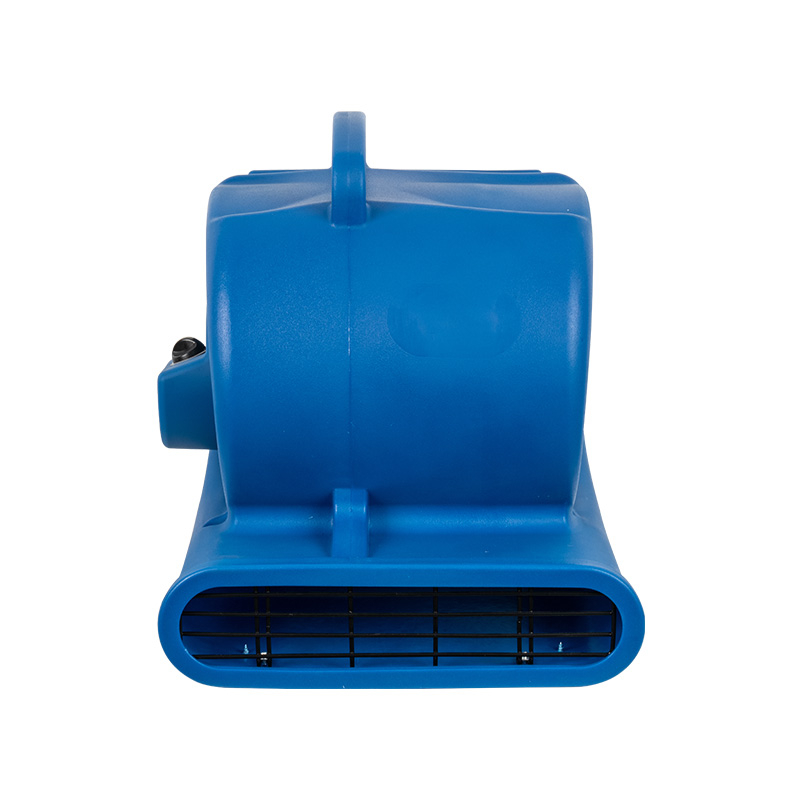
A flat air mover, often marketed as a low-profile or thin-profile air mover, is a compact design that stands roughly half the height of a standard centrifugal unit, with many models measuring close to 10 to 11 inches tall. That reduced height lets the unit slide into spaces a standard air mover physically cannot reach: under kitchen cabinets, beneath raised furniture, inside crawlspaces, and along baseboard cavities.
Rather than pushing air straight up, a flat air mover releases a wide, shallow stream that runs parallel to the floor. This keeps airflow sheared directly across the wet surface without needing to lift carpet or move furniture, which is why the design is standard on Category 1 clean-water drying jobs where speed and minimal disruption both matter.
| Specification | Typical Range |
|---|---|
| Airflow output | 800 to 1,700 CFM |
| Motor size | 1/5 HP to 1/4 HP |
| Amp draw | 2.0 to 2.8 amps |
| Unit height | Approximately 10 to 11 inches |
| Weight | 22 to 24 lbs |
| Stackable capacity | Up to 10 units |
Look for a built-in GFCI outlet for daisy-chaining multiple units off one circuit, a carpet clamp for drying without pulling carpet up, and an unbreakable roto-molded housing, since flat units get slid in and out of tight spots constantly and take more physical abuse than upright models.
Both designs move large volumes of focused air, but they solve different placement problems. A standard centrifugal or axial air mover stands upright and directs air outward from chest or knee height, making it the better choice for open-floor drying, wall drying, and general room ventilation. A flat air mover trades some raw airflow for the ability to fit where an upright unit cannot go.
| Feature | Standard Air Mover | Flat Air Mover |
|---|---|---|
| Typical CFM | 1,500 to 3,600 CFM | 800 to 1,700 CFM |
| Height | 18 to 24 inches | 10 to 11 inches |
| Best for | Open floors, walls, ceilings, large rooms | Under cabinets, crawlspaces, baseboards |
| Airflow direction | Angled, outward stream | Wide, shallow, parallel to floor |
| Noise level | Moderate to high | Generally quieter |
On most restoration jobs, the two designs work together rather than as a substitute for one another: flat air movers handle the tight, low-clearance spots while standard units cover the open floor area.
CFM requirements scale with room size and the severity of the moisture. As a general guideline, residential rooms typically need 1,000 to 2,000 CFM of total airflow, while commercial spaces often require 2,000 to 3,000+ CFM, achieved either with a single high-output unit or multiple standard units working together.
The IICRC S500 standard, the industry reference for water damage restoration, also ties unit count to wall length rather than just square footage: as a working rule, add one air mover for every 10 to 16 linear feet of wet wall, plus an additional unit for each wall inset or offset larger than 18 inches. Following this formula helps ensure no wet section is left without direct airflow.
Placement affects drying speed as much as CFM rating does. A powerful unit aimed incorrectly will dry slower than a smaller unit placed well. The following placement rules are drawn from standard restoration practice and apply to both flat and standard air movers.
For a spot on a wall or ceiling, adjust the unit's angle so the airstream reaches that exact area rather than relying on general circulation to eventually dry it. Leaving air movers running unattended for extended periods without checking progress is one of the most common reasons restoration jobs take longer than they should.
Water damage restoration is the primary use case, but air movers, including flat models, are common equipment well outside that industry.
In each of these cases, the same principle applies: focused, high-velocity airflow moves moisture or stale air away faster than passive ventilation alone.
Beyond the CFM rating, a handful of build-quality features determine how well a unit performs over repeated use.
Professional-grade units generally cost more upfront but hold up to daily transport and continuous runtime far longer than consumer-grade fans, which lowers the effective cost per job over time.
তিন-পর্যায়ের পরিস্রাবণ: এয়ার স্ক্রাবারে একটি তিন-পর্যায়ের পরিস্রাবণ ব্যবস্থা রয়েছে যার মধ্যে একটি প্রি-ফিল্টার (MERV-10), কার্বন ফিল্টার এবং H13 HEPA ফিল্টার রয়েছে। 0.3 মাইক্রনের মতো ছোট কণার ...
বিস্তারিত দেখুন
AM-B01 হাই এয়ার ভলিউম থিন কার্পেট ড্রায়ারগুলি একটি শক্তিশালী মোটর দিয়ে সজ্জিত যা আপনার কার্পেট পুঙ্খানুপুঙ্খভাবে এবং দ্রুত শুকিয়ে যায় তা নিশ্চিত করতে উচ্চ পরিমাণে বায়ুপ্রবাহ তৈরি করে। এই উচ্চ...
বিস্তারিত দেখুন
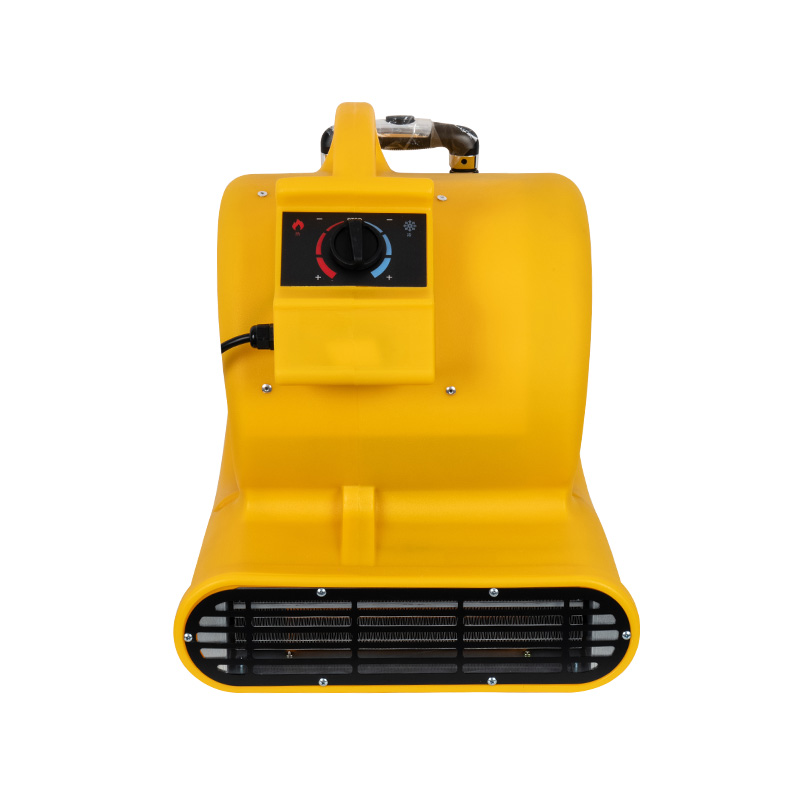
AM-A01 হট এবং কোল্ড কার্পেট ড্রাইং ফ্যানগুলি হল বহুমুখী ইউনিট যা গরম এবং ঠান্ডা বাতাস ব্যবহার করে কার্পেট শুকানোর প্রক্রিয়াটিকে দ্রুততর করার জন্য ডিজাইন করা হয়েছে৷ গরম এবং ঠান্ডা বায়ু সঞ্চালনের ...
বিস্তারিত দেখুন
AM-A02 মাল্টি-উইং সেন্ট্রিফুগাল উইন্ড হুইল কার্পেট ড্রায়ারগুলি মাল্টি-উইং সেন্ট্রিফিউগাল উইন্ড হুইল প্রযুক্তি ব্যবহারের মাধ্যমে দ্রুত এবং আরও দক্ষ কার্পেট শুকানোর জন্য কার্যকরভাবে বায়ু শক্তি এবং ...
বিস্তারিত দেখুন
AM-A03 Small Axial Floor Carpet Dryer হল একটি অত্যন্ত দক্ষ এবং বহুমুখী শুকানোর ইউনিট যাতে একটি সেন্ট্রিফিউগাল এয়ার মুভার থাকে যা দ্রুত সারফেস শুকানোর জন্য। এটি কেবল কার্পেট, মেঝে, আসবাবপত্র, জানাল...
বিস্তারিত দেখুন
AM-A04 লাইটওয়েট পোর্টেবল কার্পেট ওয়াল ফ্লোর ড্রায়ারে দ্রুত পৃষ্ঠ শুকানোর ফলাফলের জন্য উন্নত কেন্দ্রাতিগ বায়ু চলাচল প্রযুক্তি রয়েছে। এটি শুধুমাত্র কার্পেট, মেঝে, আসবাবপত্র, জানালা এবং প্রাচীর শ...
বিস্তারিত দেখুনস্টোর তথ্য
নং 88, Yuexin রোড, Sanjiang Street, Shengzhou City, Shaoxing City, Zhejiang Province, China
+86-13819532379
লিঙ্ক
পণ্য
মোবাইল টার্মিনাল

